Legend Captain: The Bold, Versatile Slab Serif Font You Need to Know About
Typography plays a crucial role in visual communication. Whether you're designing a logo, crafting a website layout, or putting together marketing materials, the right font can elevate your message and make it memorable. Legend Captain, a captivating slab serif typeface, is one such font that blends vintage charm with a modern edge. Its bold and robust letterforms are not only visually striking but also highly functional across various design contexts.
What Is Legend Captain?
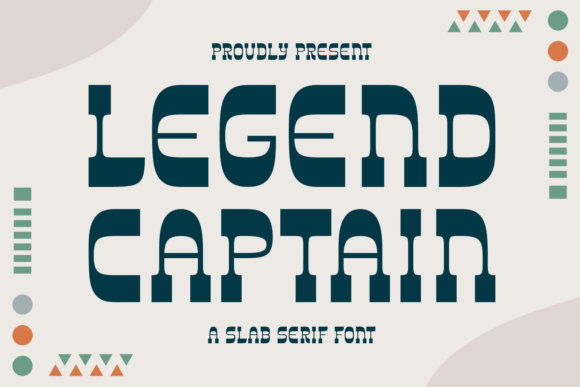
Legend Captain is a slab serif font that stands out due to its strong architectural lines and subtle curves. Unlike traditional serifs, which often have delicate finishing strokes, slab serifs like Legend Captain feature thick, block-like serifs that give them a more assertive presence. This makes it ideal for headlines, logos, and branding projects where making an immediate impact is key.
Designed for clarity and charisma, Legend Captain retains legibility even at smaller sizes while still commanding attention when scaled up. It’s a versatile choice that works well both digitally and in print, offering designers a unique tool to craft compelling visuals without sacrificing readability.
Why Designers Love Legend Captain
- Vintage Meets Modern: With its classic slab serif structure and contemporary tweaks, Legend Captain feels timeless yet fresh.
- Strong Visual Identity: The font’s boldness helps reinforce brand identity, especially for businesses looking to project confidence and authority.
- Flexibility Across Mediums: From web banners to printed posters, Legend Captain adapts well, maintaining its character across different platforms.
- Wide Character Set: Many versions of the font include multiple weights, ligatures, and alternate characters, giving users creative freedom.
Common Mistakes When Choosing and Using Legend Captain
While Legend Captain is a powerful tool, there are some common pitfalls users may encounter when selecting or applying it to their projects. Understanding these mistakes can help you avoid costly errors and ensure your designs look professional and effective.
Mistake 1: Overusing the Font in Body Text
Slab serif fonts are generally best suited for display purposes rather than long-form body text. The thick strokes and condensed shapes of Legend Captain can become tiring to read over extended passages, especially on screens. This might lead to poor user experience and reduced engagement if used improperly.
Better approach: Reserve Legend Captain for headlines, subheadings, or short impactful phrases. Pair it with a clean sans-serif or a readable serif font for body copy to maintain balance and usability.
Mistake 2: Ignoring Spacing and Kerning
Because of its bold nature, Legend Captain can appear cramped if not properly spaced. Neglecting kerning—the adjustment of space between specific pairs of letters—can result in awkward visual tension, particularly in logotypes or acronyms. Poor spacing undermines the font’s strength and makes the text harder to digest.
Better approach: Always check the spacing manually in your design software. Some versions of Legend Captain come with built-in optical adjustments, but custom tweaking will often yield better results.
Mistake 3: Assuming All Weights Are Created Equal
Not all weights of Legend Captain perform the same way in every context. For instance, using the ultra-bold version in small sizes can cause overlapping strokes, reducing legibility. Similarly, lighter weights may lose their distinctive flair when viewed from a distance.
Better approach: Test each weight at the intended size and background before finalizing. Consider how contrast, stroke width, and x-height affect readability in different applications.
Mistake 4: Misjudging Color Contrast
The high contrast of Legend Captain means that color choices matter significantly. If placed against a dark or busy background, the font can lose its punch. Conversely, using it on light backgrounds with low-contrast colors might dull its effect.
Better approach: Use high-contrast combinations, such as black on white or white on deep navy, to maximize visibility and aesthetic appeal. Avoid gradients or patterns unless you’re prepared to spend extra time refining the composition.
When Not to Use Legend Captain
Even the best fonts aren’t always the right fit. Here are a few scenarios where Legend Captain might not be the optimal choice:
- Small Print Projects: In tiny sizes, the font’s thick serifs can merge into solid blocks, making individual letters hard to distinguish.
- High-Volume Reading Materials: Books, reports, or articles with dense paragraphs would benefit more from a softer, more legible font.
- Inconsistent Branding: If your brand already uses a minimalist or futuristic style, Legend Captain could clash instead of complementing the overall look.
How to Evaluate Legend Captain Before Committing
Before downloading or purchasing Legend Captain, take a moment to evaluate whether it aligns with your design goals and audience expectations. Ask yourself the following questions:
- Does the font support the language and symbols I need?
- Will it work well with my existing color scheme and design elements?
- Can I use it across all necessary platforms (web, print, mobile)?
- Is the licensing model suitable for my business or personal use?
Many foundries offer free trials or limited-use versions of their fonts. Take advantage of these to test Legend Captain in real-world scenarios. A quick mockup of your logo or headline can reveal whether the font enhances or distracts from your message.
Pro Tips for Using Legend Captain Effectively
To get the most out of Legend Captain, consider these expert-level suggestions:
- Use it for Impactful Statements: Ideal for taglines, product names, and event titles where you want to emphasize strength and character.
- Pair Thoughtfully: Match Legend Captain with a complementary secondary font—like a sleek sans-serif or a refined monospace—for a balanced typographic hierarchy.
- Experiment with Case: Try using all caps for maximum boldness or mix uppercase and lowercase for a more dynamic feel. However, avoid excessive case mixing in formal settings.
- Consider Alternates and Ligatures: These can add personality to your design. But don’t overdo it; too many stylized characters can confuse the reader.
Real-World Examples of Legend Captain in Action
Let’s look at a couple of practical examples where Legend Captain shines:
- Restaurant Logo: A retro diner might use Legend Captain in bold red for its name, paired with a warm yellow background. The font adds a nostalgic touch while staying clear and inviting.
- Event Poster: For a music festival promoting a vintage rock vibe, Legend Captain could serve as the main title font. Its robust appearance conveys energy and authenticity.
- Product Packaging: A craft beer label featuring Legend Captain in a darker weight gives it a rugged, artisanal look that appeals to its target market.
Final Thoughts on Making the Right Choice
Choosing the right font is more than just picking something stylish—it’s about ensuring clarity, accessibility, and alignment with your brand voice. Legend Captain is a standout option for those seeking a bold, charismatic typeface that brings vintage flair to modern designs. However, understanding its limitations and proper usage is essential to leveraging its full potential.
By avoiding common mistakes and testing the font in your actual design environment, you can confidently incorporate Legend Captain into your creative toolkit. Remember, the goal is to enhance your message, not overshadow it. Make informed decisions, and your typography will speak volumes for your brand.