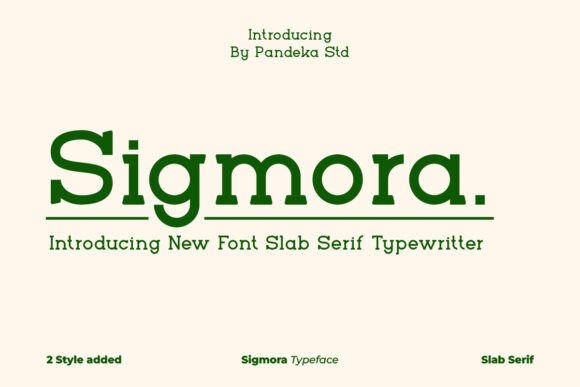
Say Hello to Sigmora – A Friendly Typewriter Slab Serif Font for Modern Designers
In the world of typography, finding the right font can be a game-changer. It sets the tone for your design and influences how your audience perceives your message. Enter Sigmora, a typewriter-style slab serif font that brings together the nostalgic appeal of vintage typefaces with the clean, bold lines of modern design. Whether you're crafting a brand identity, designing a poster, or working on a book cover, Sigmora offers a unique aesthetic that stands out without being over the top.
What is Sigmora?
Sigmora is a digital font that emulates the look and feel of a classic typewriter but adds a contemporary edge through its slab serif structure. The name itself hints at its character—derived from the Greek letter sigma (σ), often used in mathematics and science to denote summation, suggesting cohesion and clarity. This font blends mechanical precision with a warm, approachable personality, making it ideal for both creative and professional applications.
Slab serif fonts are known for their sturdy, block-like serifs, which give them a strong visual presence. Unlike traditional serif fonts like Times New Roman or Georgia, slab serifs such as Rockwell or Courier tend to have a more industrial and assertive appearance. Sigmora walks this line beautifully, offering a friendly yet authoritative feel that's not commonly found in other typewriter-inspired fonts.
Distinctive Features of Sigmora
- Vintage Meets Modern: Sigmora takes cues from old typewriters but refines them with crisp edges and consistent spacing, avoiding the unevenness typical of scanned typewriter fonts.
- Bold and Clear: Its slab serifs make the characters more legible at larger sizes, while maintaining enough charm to avoid looking too rigid or corporate.
- Versatile Weight Options: With multiple weights available, Sigmora adapts well to different design needs—from subtle body text to eye-catching headlines.
- Character Set Diversity: Includes support for various languages and special characters, making it suitable for international projects.
When to Use Sigmora: Best-Fit Situations
The versatility of Sigmora means it can be applied in several design contexts. Here are some scenarios where it shines:
- Branding Projects: For brands that want to evoke a sense of nostalgia while maintaining a modern identity, Sigmora provides an excellent middle ground. Its friendly nature makes it suitable for logos that need to feel welcoming but still convey strength.
- Print Media: Posters, flyers, and brochures benefit from Sigmora’s readability and striking presence. It works particularly well when paired with minimalist layouts or high-contrast color schemes.
- Book Covers and Titles: Authors or publishers looking to create a retro vibe with a touch of professionalism might find Sigmora appealing. Its typewriter roots can suggest authenticity, while the slab serifs add weight and elegance.
- Editorial Design: In magazines or blogs focused on lifestyle, travel, or craftsmanship, Sigmora can serve as a headline font that draws attention without overwhelming the reader.
Strengths of Sigmora
One of Sigmora’s biggest strengths is its ability to balance warmth and authority. This duality allows it to work across genres and industries with minimal tweaking. It also has good spacing and kerning, which helps maintain consistency in both short and long text blocks.
Another advantage is its compatibility with digital platforms. As a modern font, it supports web use via WOFF and TTF formats and is optimized for screen display. This ensures that your designs look great whether viewed on a desktop, tablet, or smartphone.
Tradeoffs and Limitations
No font is perfect for every situation, and Sigmora is no exception. While it excels in many areas, there are certain limitations to consider before choosing it for your project:
- Not Ideal for Long Paragraphs: Though readable, the typewriter aesthetic may become fatiguing for extended reading sessions. For dense content like articles or reports, pairing it with a more neutral sans-serif or serif font is advisable.
- May Clash with Certain Styles: If your design already includes heavy textures or intricate illustrations, Sigmora’s bold slabs might overpower the overall composition. In such cases, a lighter or more delicate font could be a better fit.
- Limited Script Variants: Since Sigmora is a slab serif font inspired by typewriters, it doesn’t offer cursive or script variations. This makes it less suitable for wedding invitations or handwritten-style branding unless used alongside another font.
Comparing Sigmora to Other Fonts
When evaluating Sigmora, it's helpful to compare it with other popular fonts in similar categories. For example, Courier New and OCR A are two widely used typewriter-style fonts. However, they lack the stylistic variation and refinement that Sigmora brings to the table. Courier New, in particular, is known for its monospaced layout, which can limit creativity in dynamic layouts.
On the other hand, slab serif fonts like Rockwell or Clarendon are more formal and structured. They don't carry the same typewriter-inspired charm as Sigmora, which gives it a niche appeal. Similarly, decorative fonts such as Playfair Display or Libre Baskerville prioritize elegance over practicality and may not suit the utilitarian goals of a typewriter font.
Compared to these alternatives, Sigmora strikes a balance between character and functionality. It’s not just a throwback; it’s a tool that respects the past while serving the present. This makes it a compelling option for designers who want something unique but usable.
How to Choose Between Sigmora and Alternatives
Deciding whether Sigmora is the right choice for your project involves considering several factors. First, evaluate the purpose of your design. Is it meant to feel authentic and grounded, or does it require a sleeker, more futuristic look? Sigmora leans toward the former, making it ideal for artisanal products, small businesses, or creative agencies with a heritage angle.
Second, think about your target audience. Will they appreciate the vintage inspiration behind Sigmora, or would they prefer something more contemporary? For instance, if you're designing for a younger demographic in a tech-driven industry, a sans-serif font might resonate better. But if your brand speaks to craft, tradition, or storytelling, Sigmora can enhance that narrative visually.
Third, consider the format and medium. Web-based projects, especially those requiring responsive design, should test Sigmora’s performance across devices. Print media, on the other hand, can take full advantage of its bold, clear characteristics for maximum impact.
Realistic Examples of Sigmora in Use
To help illustrate how Sigmora can be applied, let’s explore a few realistic examples:
- Coffee Shop Logo: A local café aiming for a rustic, handcrafted image uses Sigmora in a bold weight for its logo. Paired with a muted color palette and a wooden background texture, the font reinforces the brand’s cozy, artisanal vibe.
- Travel Magazine Cover: A travel magazine highlights a destination using Sigmora in all caps for the title. The contrast between the vintage font and a modern photo of a city skyline creates a fresh, intriguing look.
- Product Packaging: A boutique candle company incorporates Sigmora into its packaging for product names. The font suggests quality and care, aligning with the brand’s focus on natural ingredients and handmade goods.
Alternatives to Consider
If Sigmora isn’t quite the right match for your project, there are several other options worth exploring. For a cleaner typewriter aesthetic, you might consider Typewriter or Letter Gothic. These fonts maintain the mechanical feel but sacrifice some of the boldness and friendliness that Sigmora offers.
For a more modern slab serif experience, fonts like Source Serif Pro or IBM Plex Serif provide refined shapes and extensive language support. These are great for digital publications or websites where legibility and scalability are crucial.
If you’re leaning toward a fully custom typewriter style, consider exploring fonts from independent foundries or even commissioning a bespoke typeface. This route allows for complete customization but typically requires more time and resources.
Key Decision Factors
Choosing the right font always depends on context, but here are a few key decision points to consider when selecting Sigmora:
- Desired Mood: Does your design need to feel warm and inviting, or sharp and professional? Sigmora leans toward the former but can adapt depending on usage.
- Design Compatibility: Will the font complement or compete with other elements in your layout? Test it with mockups to ensure harmony.
- Project Requirements: Do you need a font that supports a wide range of languages or integrates smoothly with web standards? Sigmora checks most of these boxes but may require additional testing in complex environments.
- Brand Personality: Is your brand’s identity rooted in nostalgia, innovation, or somewhere in between? Sigmora works best when aligned with a thoughtful brand strategy.
Final Thoughts on Sigmora
Sigmora is more than just a pretty font—it’s a carefully crafted design solution that bridges the gap between typewriter aesthetics and modern usability. Its bold, friendly appearance makes it stand out in a sea of generic typefaces, while its slab serif structure ensures it remains functional and readable.
However, like any font, its effectiveness depends on how well it aligns with your specific needs. If you're seeking a versatile, stylish option that can bring a touch of personality to your projects, Sigmora is definitely worth a closer look. Just remember to weigh its strengths against potential limitations and consider how it fits within your broader design ecosystem.
Ultimately, the best way to determine if Sigmora is the right choice is to experiment with it. Try it in different weights, pair it with complementary fonts, and see how it enhances your message. Typography is a powerful tool, and with the right selection, it can elevate your work from good to unforgettable.